The environmental challenge I address is the rapidly growing threat of heatwaves, and more importantly the deep inequalities in how we understand and respond to it. Much of what we know about heatwaves are shaped by global policy discourse, developmental and media narratives. Using AI and Natural Language Processing (NLP) has been useful in uncovering large scale patterns in how extreme heat is known in the media and public sphere. What I see missing from current scholarship is how these narratives reflect deeper logics about environmental challenges, power and politics. In places like Tarai lowlands in Nepal, indigenous technologies & practices have managed extreme heat for centuries. The governance and narratives of heat and environmental change unfold a lot less through formal ways, and much more through the daily routines, moral norms, and spiritual obligations that organise life. These practices rarely appear in climate conversations. The disconnect between global narratives and local realities of dealing with heat is what animates my research.
By interrogating assumptions of dominant narratives and bringing indigenous grammars and experiences into the picture, I hope to inform current debates of climate change that continue to be heavily shaped by Eurocentric ways of knowing. Engaging directly with communities allows me to co-create knowledge and develop perspective grounded in real-world experiences, ensuring a more inclusive and nuanced discussions of the challenges at hand. And by blending large scale text analysis through AI with ethnographic research and close reading, I hope to shift conversations about how we orient AI and NLP towards climate justice – in practice – that integrate new ways of engaging with complexity, science and social critique.
2. What methods and approaches are you using to carry out your research?
My research blends qualitative and computational methods. I conduct ethnography where I engage with everyday practices and materialities through which people understand and govern extreme heat. This involves conducting interviews, observations, situational analysis and participatory approaches that allow me to co-create insights with local communities. Computationally, I employ NLP methods to analyse thousands of news articles. This method helps me trace dominant tropes, ideas and narratives in the media that reveals assumptions and power dynamics that shape public conversations about heatwaves. Bringing these two worlds together (the very big and the very small) through symbolic interactionist approaches in sociology, I’m developing new ways to examine climate narratives, ones that can recognise complexity, challenge modern assumptions about science and nature, and guide AI tools towards fairer and more inclusive understandings of extreme heat.
3. Partners – who are you collaborating with & stakeholders etc?
While my project does not rely on formal institutional partnership, my research is grounded in close collaboration with a range of stakeholders that include scientific experts in Nepal in the Department of Hydrology and Meteorology and Tribhuvan University, humanitarian organisations such as Red Cross red crescent, journalists, community groups and locals.
4. How exactly are you using AI / data science in your research? Could you do it without AI?
I use AI, particularly Natural Language Processing (NLP) to study very large collections of news articles about heatwaves. These tools help me identify dominant themes, and narrative tropes that recur across global media. Concretely I use topic modelling with grounded theory to reveal clusters and constellations of ideas about heatwaves. This gives me the outline of the landscape. I also use semantic axis projection methods that allow me to examine the “grammars” of heatwaves – how concepts relate to each other, how ideas co-occur, and how they transform over time. It is a way to reveal the different terrains of the landscape of heatwave narratives.
I bring my ethnographic insights in the use of AI. My fieldwork in Nepal gives me the sensibilities to read the shadows of the outputs. I am less approaching this from the assumption that data about indigenous practices for example is missing, but rather that what is missing is their visibility within narrative hierarchies and the sources and habits through which we typically study narratives. So, I look for patterns of silences and misalignments that emerge when things like embodied experiences, indigenous practices and relational understandings of heat become entangled with technoscientific framings. These frictions help me interpret results and reorient my methodologies.
Could I do this research without AI? I could still do the ethnography, but I would lose the “big picture” of how narratives are organised and naturalised at scale. My aim is also to understand how AI and methodological cultures themselves produce and organise those narratives. So, engaging with AI allows me to see how certain stories become dominant, how others are backgrounded, and how computational tools and practices can be reimagined in a fairer more inclusive way.
5. What stage of the project are you at? What’s been done and what’s to come?
I’m now in the final stages of the project. I have completed my ethnographic fieldwork in Nepal as well as the NLP based analysis of heatwave narratives. At this point, I’m bringing these strands together, refining my interpretations, and writing up the findings. While the core research is done, like any research, the project has opened several new directions, particularly around developing alternative datasets and experimenting with more inclusive methods for analysing climate narratives.
6. Interdisciplinary working: How are you finding working across disciplines? What are those disciplines / connections? Any particular challenges or opportunities you’ve encountered?
Working across disciplines like sociology, Science and Technology Studies (STS), and computational Social Science is challenging but also energising. The worldviews and knowledge frameworks of these fields don’t always match, they ask different questions, value different types of methods and evidence, and move at different speeds. But those tensions are exactly what make interdisciplinary work rewarding. They open room for new conversations, new methods, and new ways of seeing climate narratives that no single discipline could offer on its own.
7. Highlights of the project so far? Anything that strikes you and the stuff that gets you excited
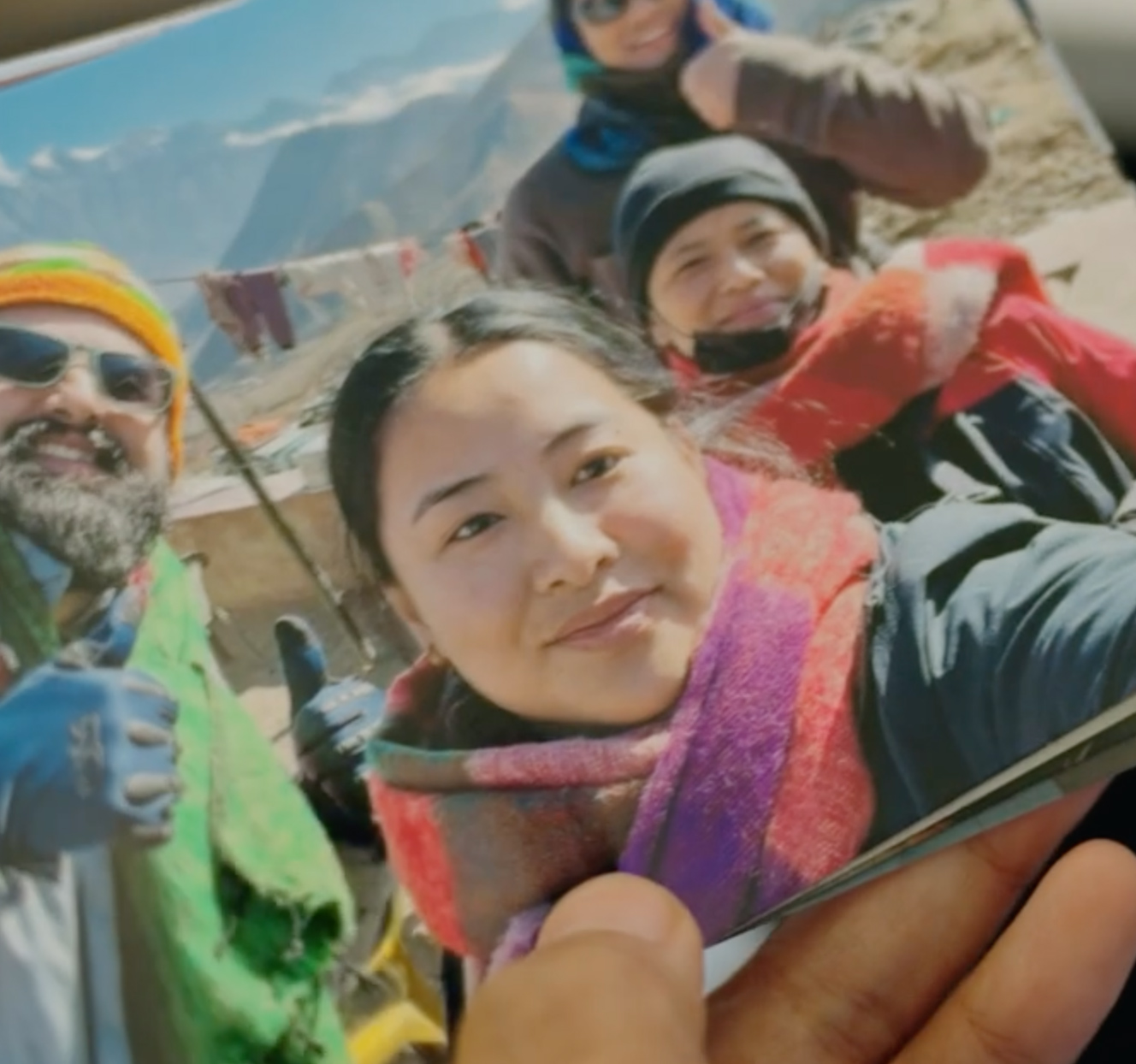
Personally, the highs and lows of doing ethnography, and learning how to hold and make sense of the vastness of the data it brings, have been incredibly rewarding. I got to experience the heat of the Tarai plains and the mountains of Nepal through new lenses, and I met so many people whose generosity and insight have shaped the project. A highlight was screening my ethnographic film at the Phoenix in Exeter. Bringing those stories and experiences into a public space and seeing people engage with them on their own terms felt very special. The thing that strikes me is the surprising openness and opportunity that working with AI has provided. Even though I’m fully aware of how capitalised and unequal the AI landscape has become, and how easily these tools can reproduce hierarchies, I am hopeful that there are imaginative ways of working with them in practice. Engaging critically with AI has shown me that there is room to shape, redirect, and repurpose these tools and our practices toward more inclusive forms of knowledge-making.
8. From a personal aspect: why you’re into this and what inspires you to do this work? / your hopes for the outcomes?
This project is close to my heart. I grew up in Nepal watching my grandparents navigate changing climate and hearing my parents talk about weather in ways grounded in their experience and practice. Seeing how these everyday forms of knowledge carry their own depth, and sophistication continues to excite me and motivates the whole project. It’s what keeps me committed to developing methods that recognise and value these ways of knowing. At the same time, I’m very aware that research often circulates unevenly. Our academic papers and my thesis may never be read by the people whose insights form the foundation of this work. That tension motivates me to think about what my research outputs can be. It’s why I’m drawn to making films, experimenting with participatory methods, and finding creative ways to produce work that is reciprocal, and meaningful for the communities who shape it. My hope is that this project does more than analyse climate narratives, that it helps shift how we value different forms of knowledge and opens up more inclusive ways of working with AI, data, and climate communication. I want the outcomes to matter both academically and, in the lives, and conversations of the people who inspired this research in the first place.